Sunday, April 16, 2006

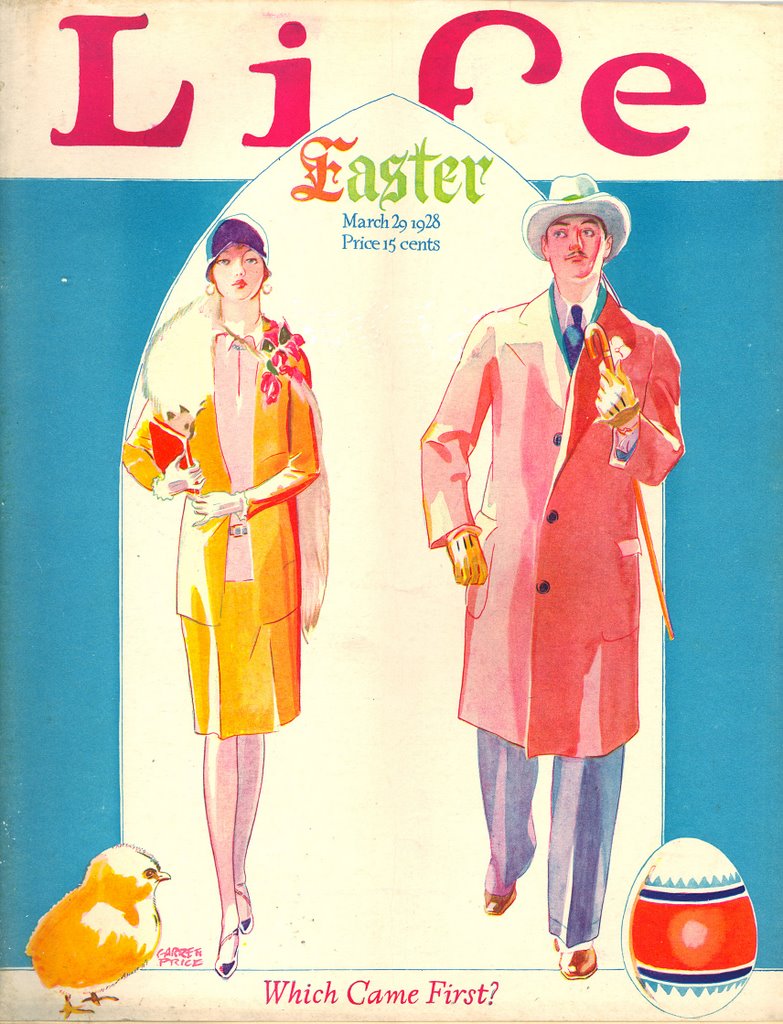
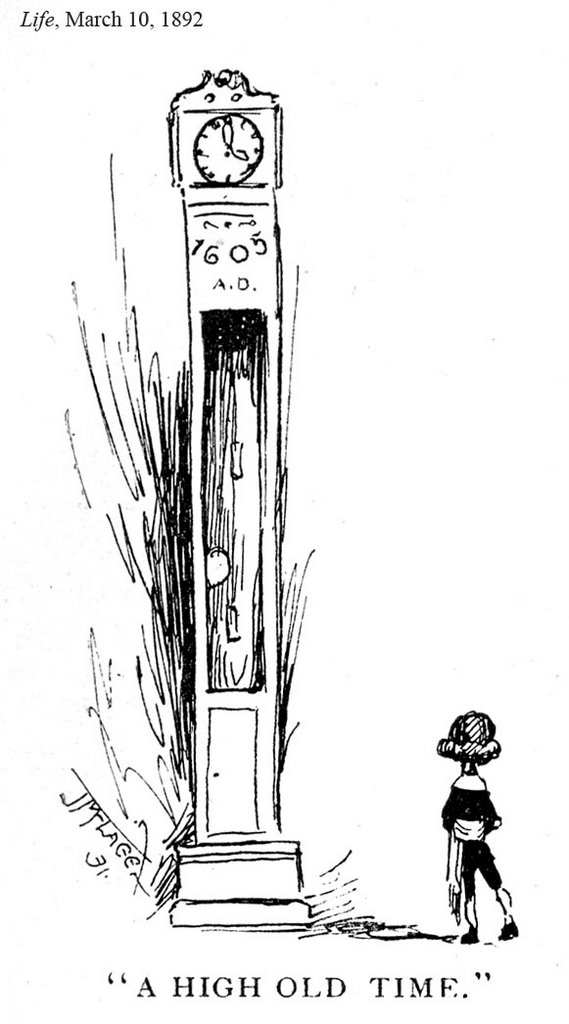
Life Drawing Sunday IV: Easter

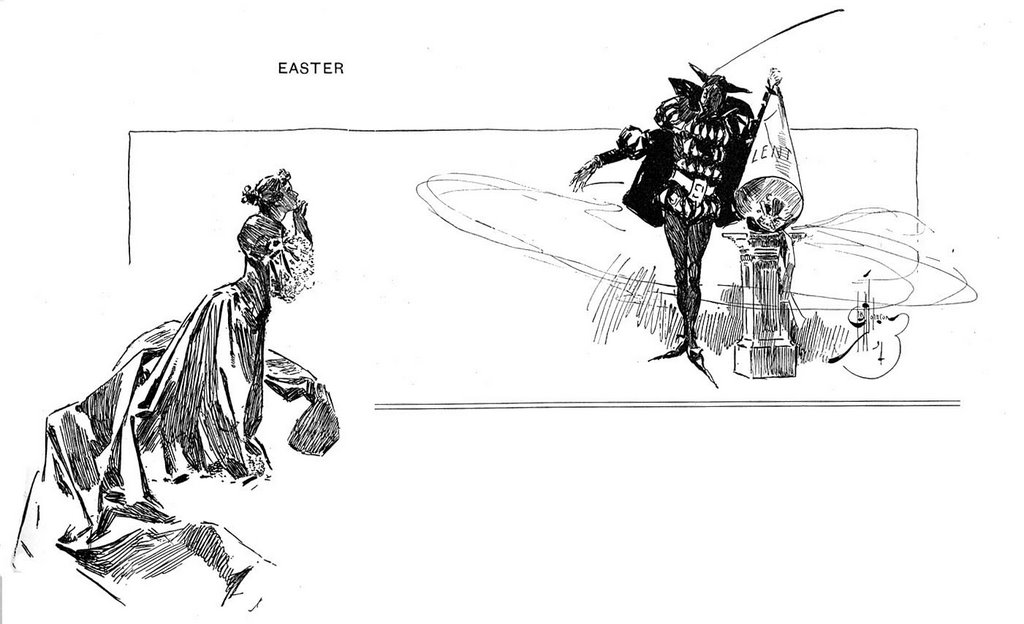
Charles Howard Johnson, March 26, 1891


Charles Howard Johnson, March 26, 1891


Charles Howard Johnson, March 22, 1894


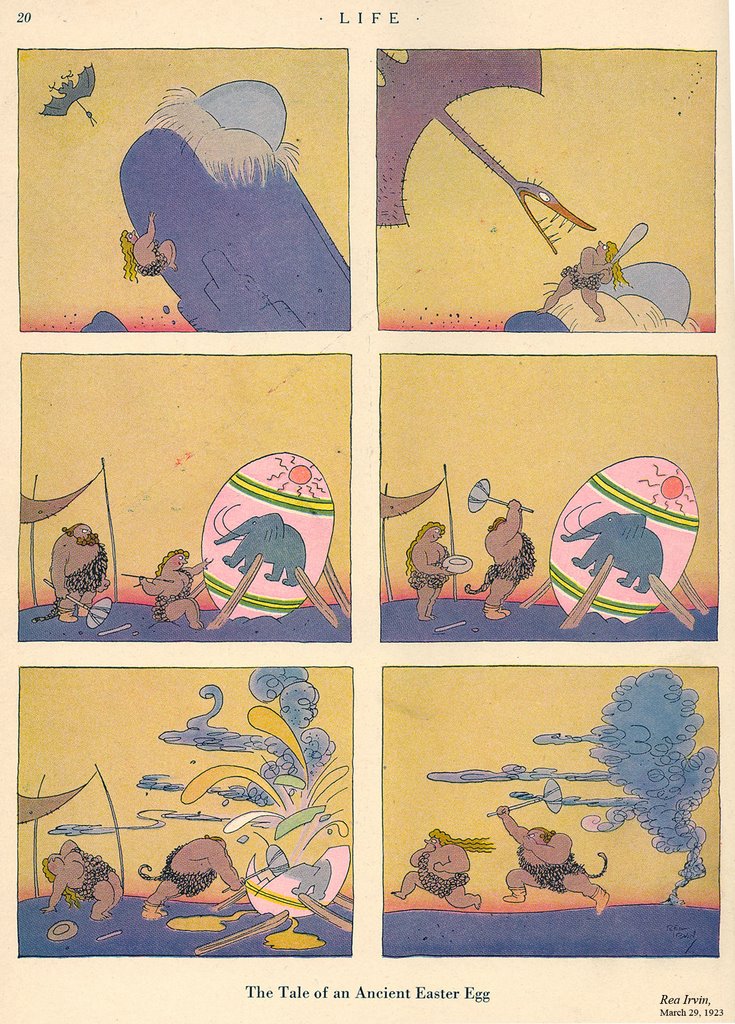
Rea Irvin, March 29, 1923

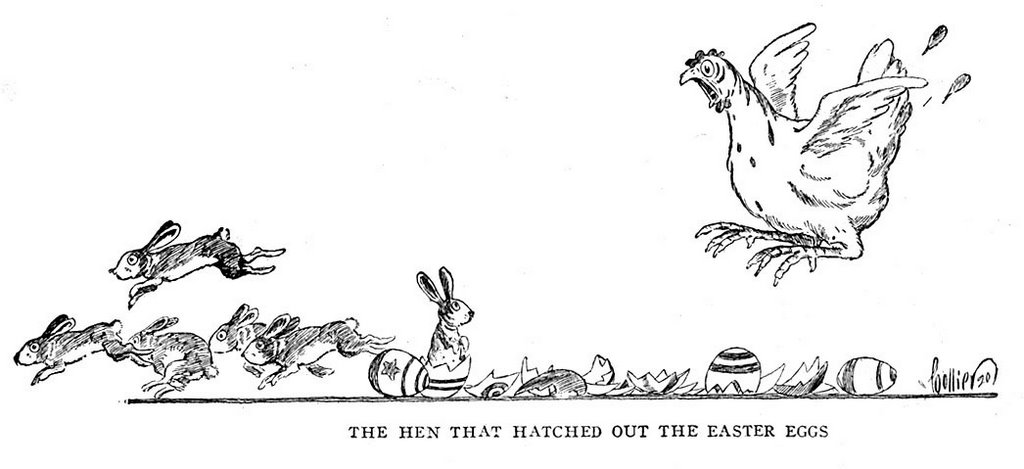
Nate Collier, April 1, 1920

Nate Collier, March 29, 1928

Charles Howard Johnson, March 26, 1891

G.B. Inwood, March 29, 1928


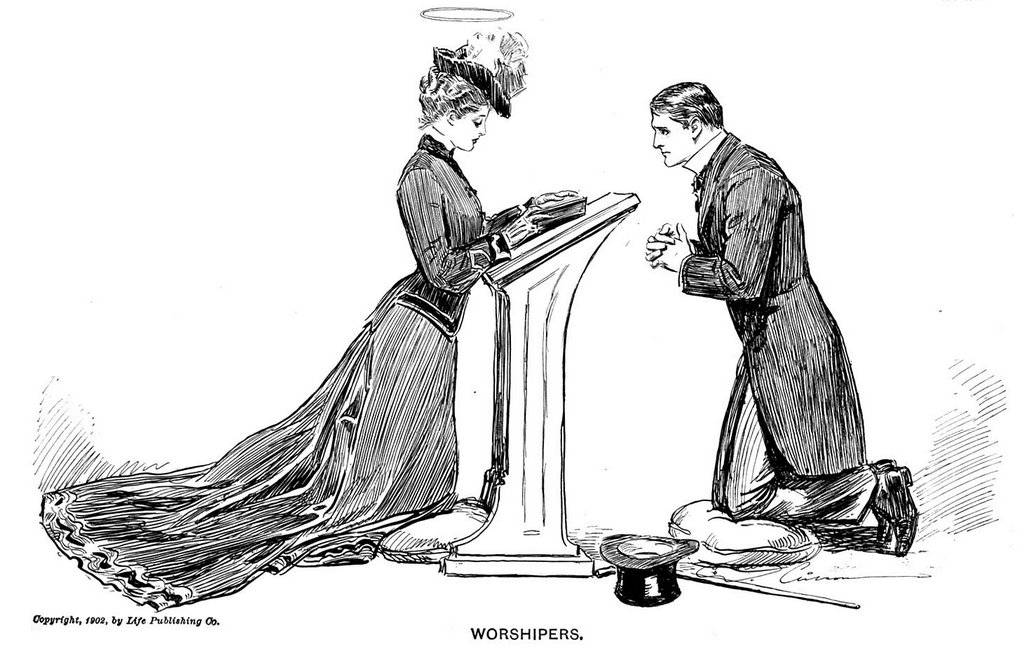
Charles Dana Gibson, March 27, 1902


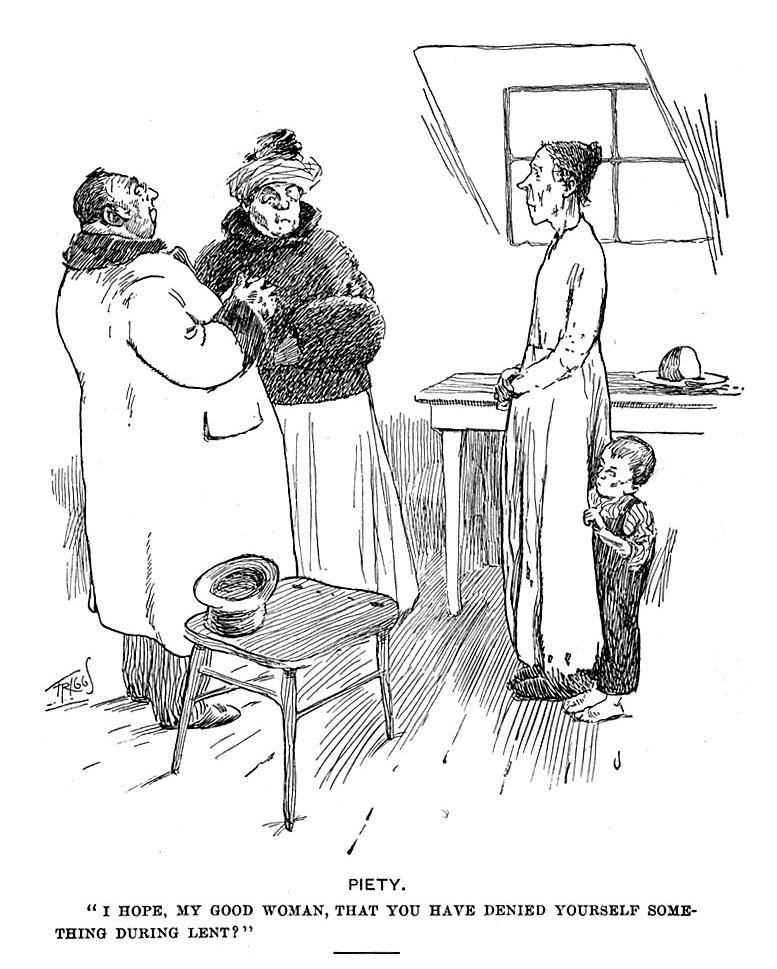
T. Riggs, March 27, 1902


Robert Crosby, April 1, 1920


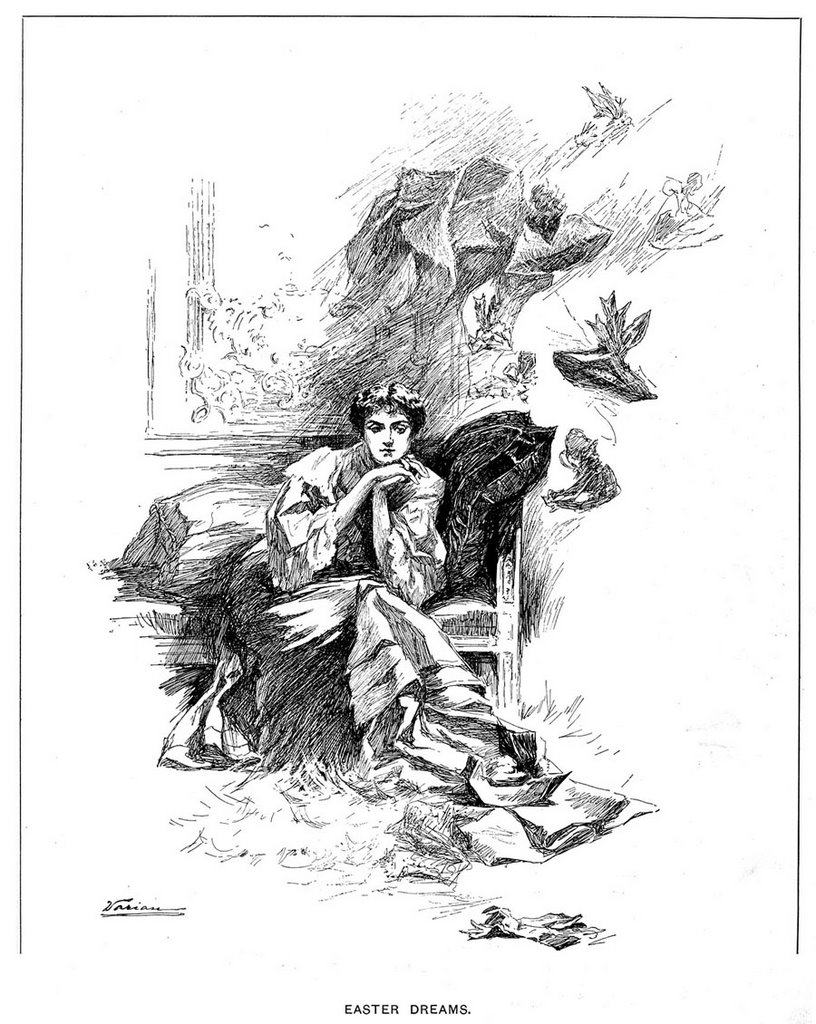
George Edmund Varian, March 22, 1894


Rodney Thomson, April 1, 1920


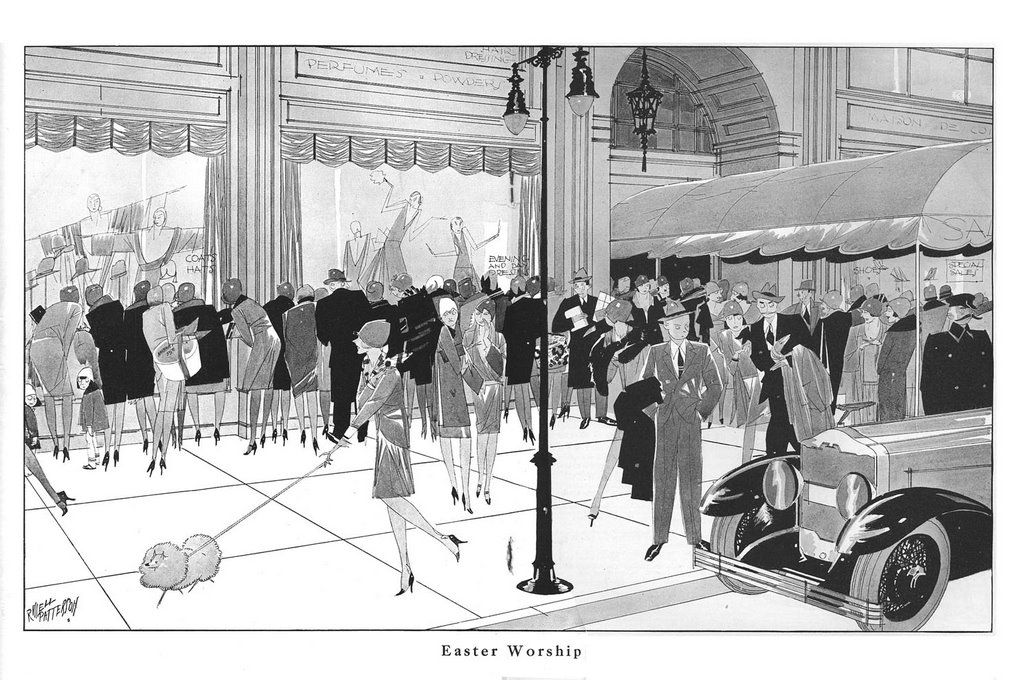
Russell Patterson, March 29, 1928


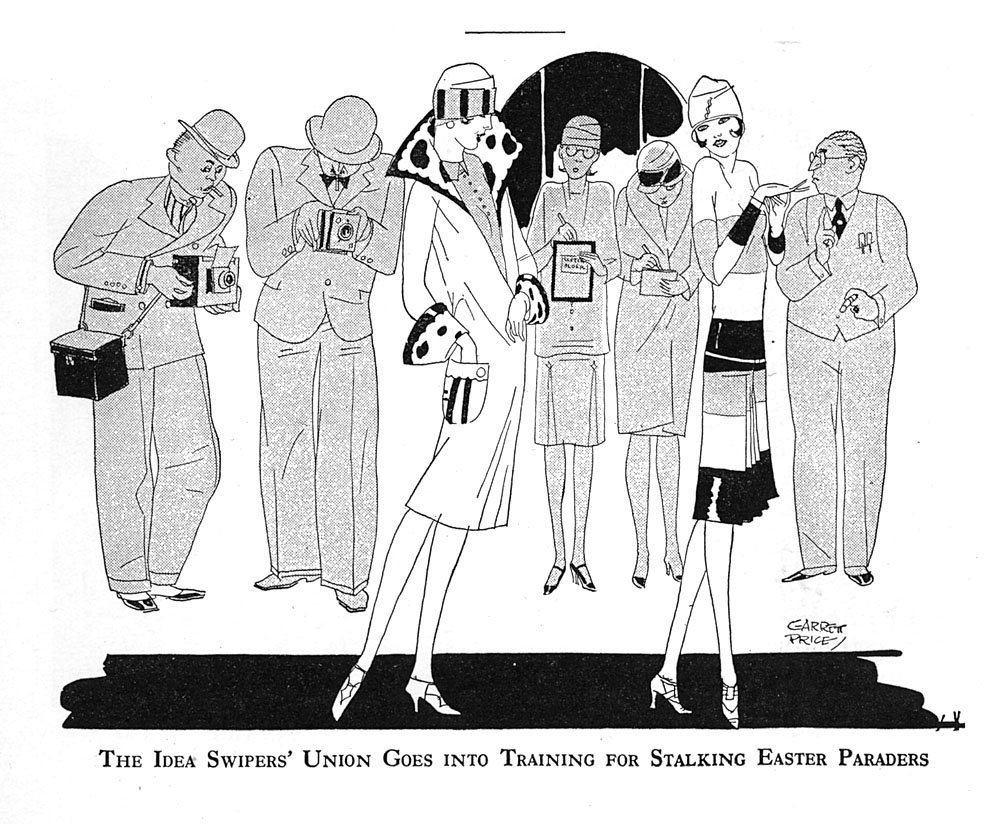
Garrett Price, March 29, 1928


Clarence Rowe, March 29, 1928


Otho Cushing, March 26, 1891


Gus Dirks, March 27, 1902


Garrett Price, March 29, 1928

Friday, April 07, 2006

Life Imitates Illustration


Two completely unrelated news items yesterday either concerned or evoked Norman Rockwell paintings. First, via The Comics Reporter, this story of the discovery of the authentic Breaking Home Ties.

Then, Head On Radio found a striking similarity between Harry Taylor, the man who somehow managed to slip through the screening process to speak freely to the Fearless Leaker himself, and Rockwell's Freedom of Speech.

Sunday, March 26, 2006

Life Drawing Sunday III: James Montgomery Flagg


James Montgomery Flagg, artist, illustrator, bohemian, booty-hound bon vivant, made his first appearance in Life at the age of fourteen. (The drawing at the left may or may not be that first one, but it was published when he was fourteen.) He started his illustration career at St. Nicholas Magazine at the age of twelve.

Though primarily, if not exclusively, remembered for his WWI "I Want You" recruitment poster, Flagg was an extremely prolific illustrator. Susan E. Meyer, in America's Great Illustrators, writes, "He received so many assignments that he claimed to have averaged an illustration a day for years - and the quantity of his work reproduced between 1904 and 1950 (as well as his earnings) substantiates the accuracy of this estimate." She also wrote about the quality of his work:

Flagg's greatest output was in pen and ink, the medium he considered most difficult. ...Flagg felt more comfortable working large, with space to move about freely. He anticipated the ultimate reduction by spacing the lines appropriately so that they would tighten without filling in when the drawing was reduced. Yet examination of these drawings full scale reveals his expert handling of a difficult medium, effects that are dazzling in their energy. He rarely used any form of cross-hatching, a common procedure for the pen artist, but rather achieved a full range of effects with simple parallel lines, placed with decisive economy. Solid blacks, brushed in swiftly, could indicate a volume beneath by mere suggestion. Scratching into the black tones, he obtained reversal - white on black rather than black on white - so that he could suggest detail in shadow. He worked in full control of the medium, yet the work appears effortlessly executed, spontaneous and assured.


Flagg also found time to write the screenplays for 24 silent films between 1917 and 1920. Ten of them were for a series called "Girls We Know" produced by Edison. One not included on the IMDB list and hesitantly attributed to Flagg has an excellent title.

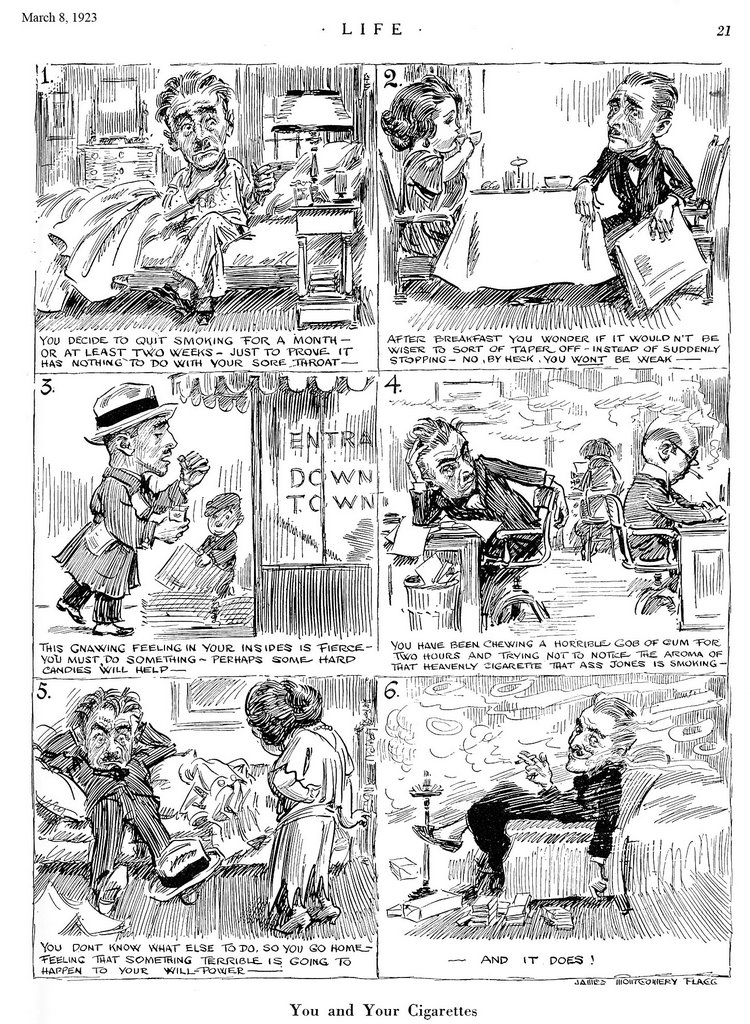
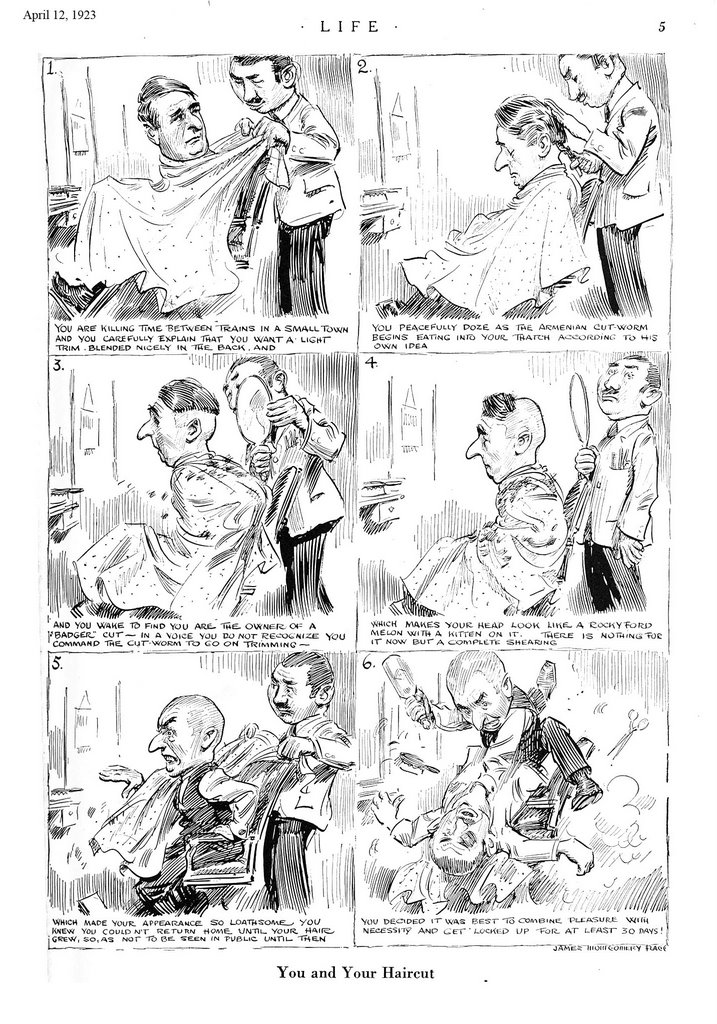
The following drawings are from early 1923, part of an occasional, Reader's Digest-y sounding series called "You and Your -" that displayed Flagg's more humorous, almost cartoony, style.


Sunday, March 19, 2006

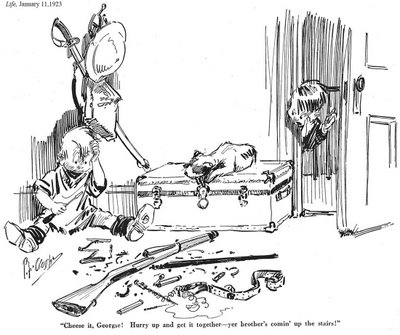
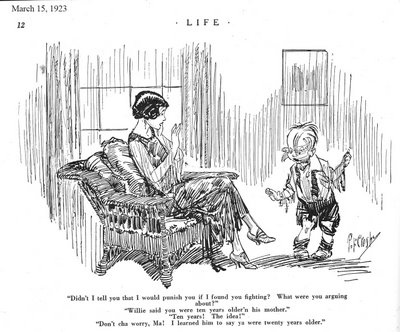
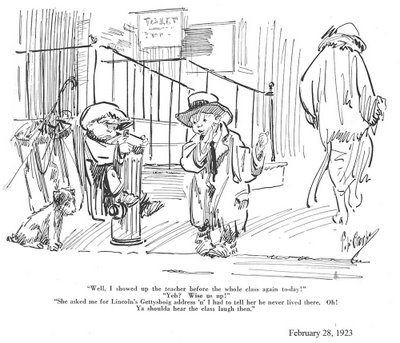
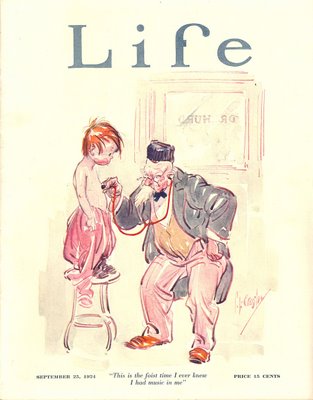
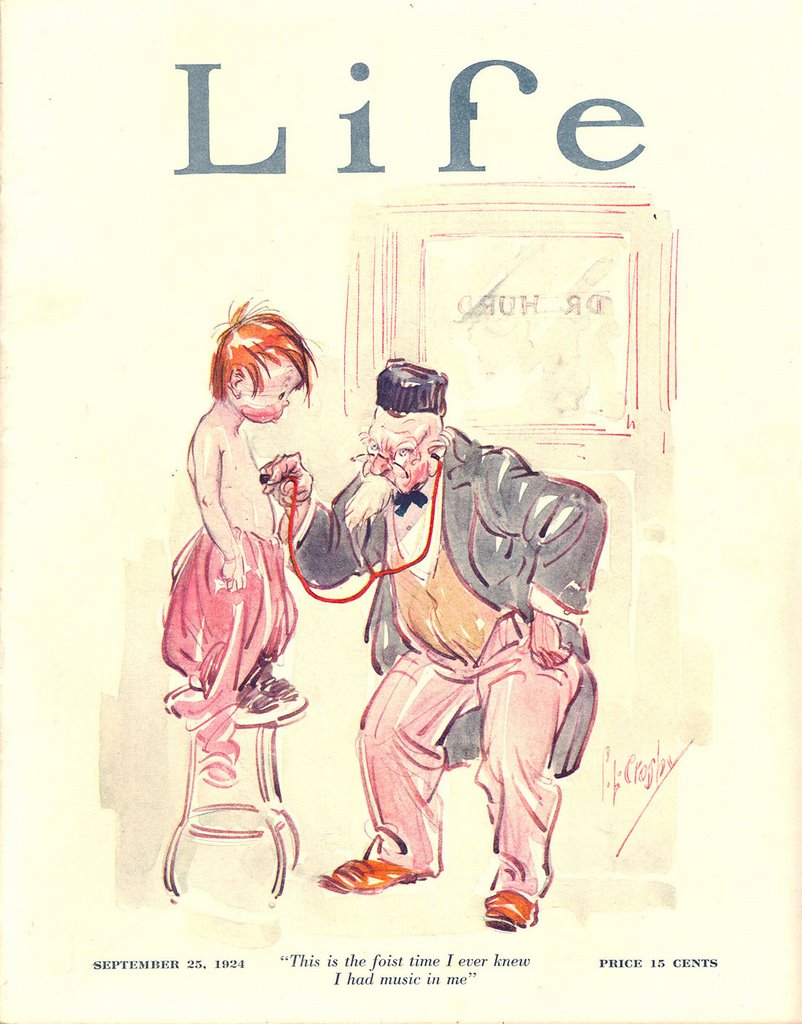
Life Drawing Sunday II: Percy L. Crosby

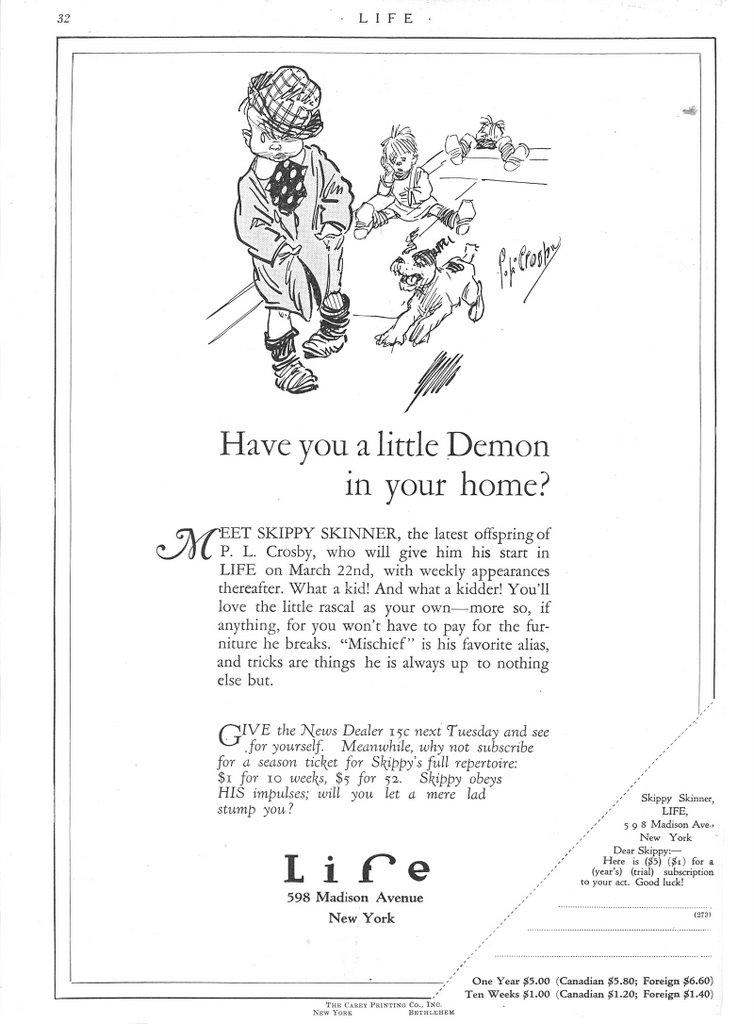
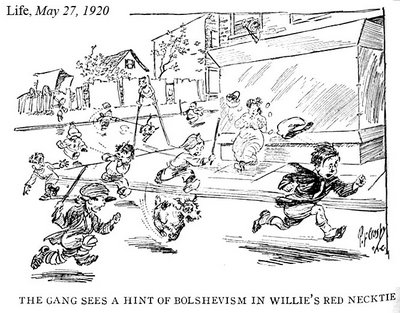
Percy Crosby's drawings began appearing in the pages of Life in 1920. In 1923 he created "Skippy" for the magazine. Hearst lured Crosby away from Life to produce Skippy as a daily strip for King Features in 1926. The character would bring him tremendous success; along with the popularity of the strip there was a wide assortment of licensed merchandise, among which a certain peanut butter was not included.
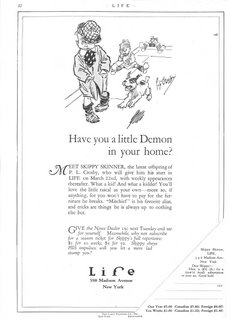

In 1931, two movies were released by Paramount, starring Jackie Cooper as Skippy and directed by Cooper's uncle Norman Taurog. (In an inspired moment of directorial expedience Taurog threatened to shoot Cooper's dog to get him to cry in one scene.Taurog won the Best Director Oscar for the picture.)

The legal difficulties with Skippy peanut butter, which were picked up by Crosby's daughter after his death in 1964 and were finally resolved forty years later were only a part of the troubles that plagued Crosby. Over the years his outspoken cartoons had made enemies of FDR, J. Edgar Hoover, Al Capone and the IRS. Two audits by the IRS hammered Crosby for back taxes, which led to a depletion of his fortune, divorce and estrangement from his children, alcoholism, legal battles with his partners in Skippy, Inc., the company he'd formed to handle merchandising of the Skippy trademark. In 1940 he was hospitalized for extreme stress.
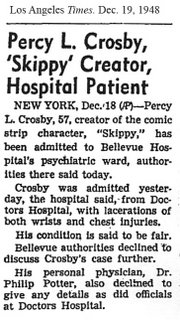
In 1945 Hearst cancelled the Skippy strip. It apparently had become too overtly political, depressing and humorless. (Ironically, some of the qualities that make for a successful strip today.)

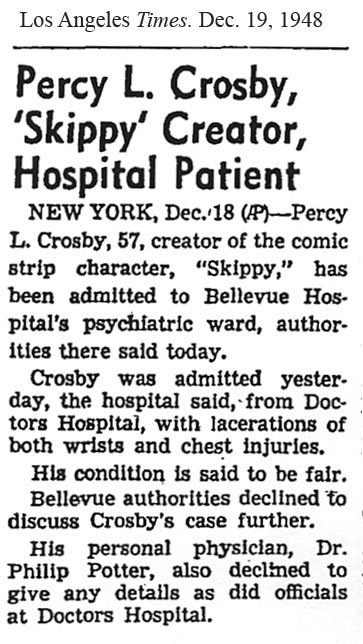
In 1948 Crosby attempted suicide. He was committed to a Long Island mental institution where, unable to obtain his release, he spent the last 16 years of his life. He died on his birthday in 1964.

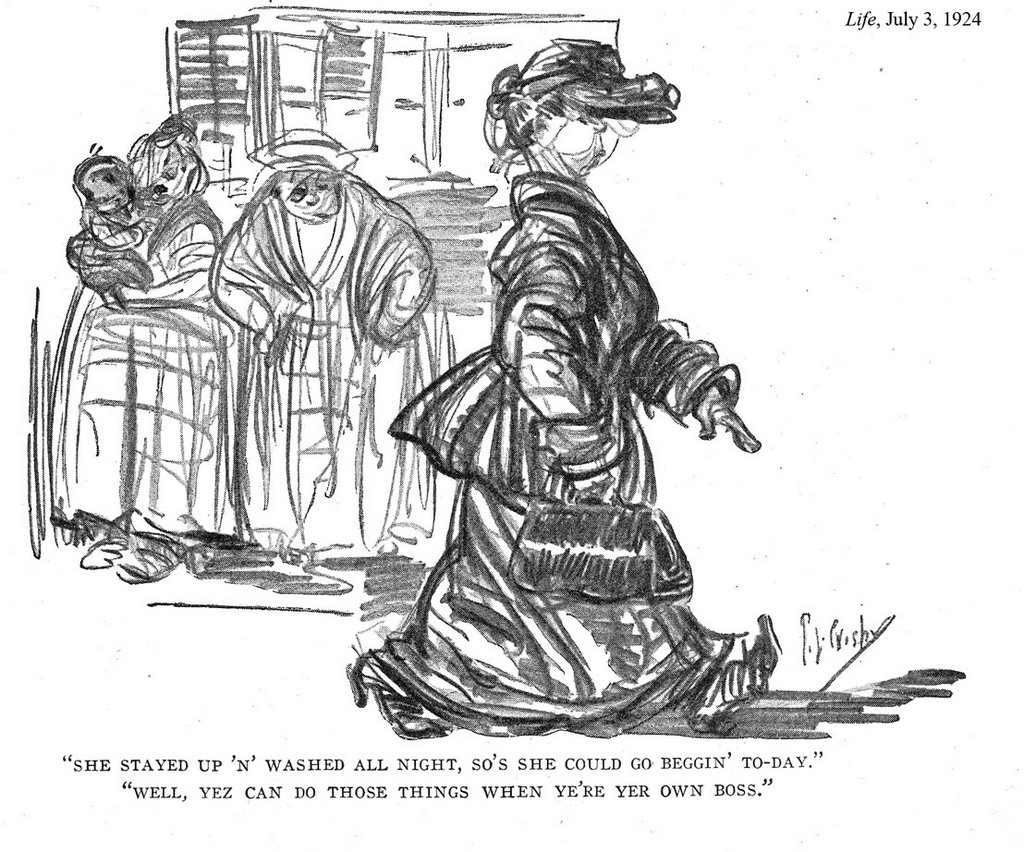
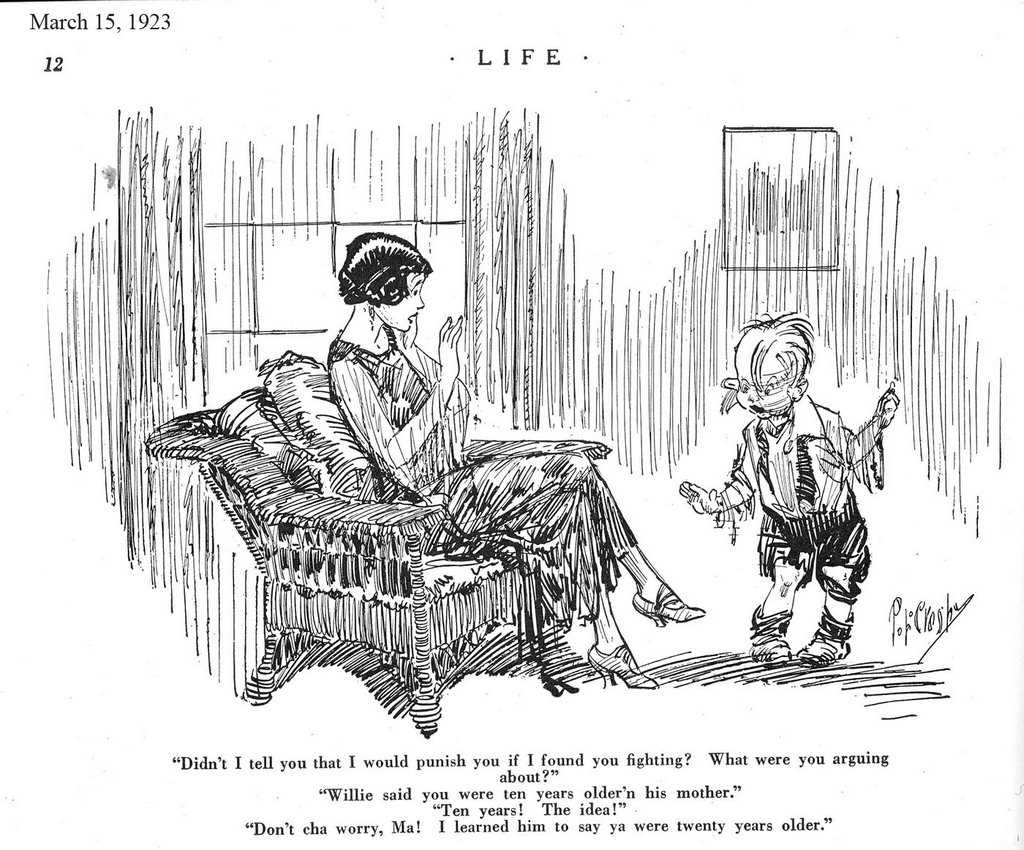
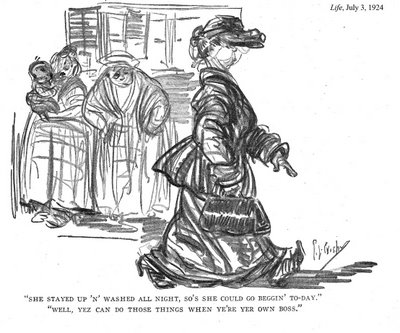
But he left behind some of the loosest, most enegetic drawings Life ever published.


Thursday, March 16, 2006

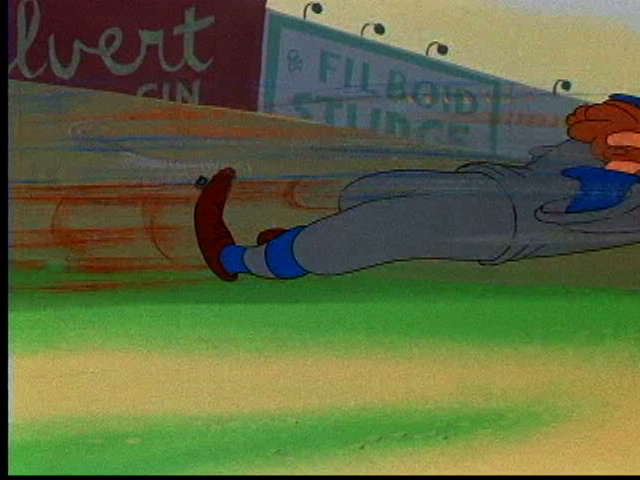
What's the score, boys?


Jaime Weinman links to this thorough analysis of "Baseball Bugs," or, more accurately, of the game therein, from U.S.S. Mariner. Among the topics discussed: Modest Soil Displacement and Accelleration Through Encouragement.

Sunday, February 19, 2006

Life Drawing Sunday 1: T.S. Sullivant, 1890 - early 1894

Life magazine, that is. The original one. "The one," as Dorothy Parker said, "that was intentionally funny." This week, the earliest available work for Life by T.S. Sullivant. These are somewhat atypical Sullivant drawings, not in the signature style that would emerge over the next few years, but the penwork is typically spectacular. [Revised 7/3/12]

September 11, 1890


October 20, 1892


December 1, 1892
June 22, 1893


January 11, 1894
January 25, 1894


February 1, 1894


February 1, 1894

An article about T.S. Sullivant by Andreas Deja can be found here. There are also two portfolios of Sullivant drawings side by side with Sullivant-inspired drawings by Deja.

Friday, January 20, 2006

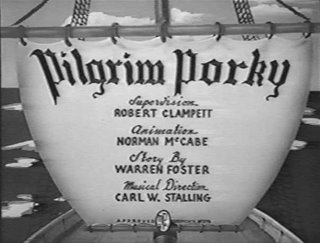
Norm McCabe, 1911-2006


News has come via an Animation Guild e-mail that the last living Looney Tunes director, Norm McCabe, has passed away:


Animator and director NORM McCABE passed away on January 17, a month shy of
what would have been his ninety-fifth birthday.

From 1934 until 1999 he worked for Schlesinger, Warner Bros., U. S. Army Air
Corps Training Film Unit, MGM, Swift Productions, Five Star Productions,
Telemation, Pacific Title, Hanna-Barbera, Filmation, DePatie-Freleng,
Ruby-Spears, Filmfair, Marvel and Universal. In 1995 he received the
Animation Guild Golden Award.

Services will be held on Tuesday, January 24 at 10 am at the Shadow Hills
Presbyterian Church, 10158 Johanna Ave. in Sunland.


I haven't found an obituary to link to yet.

The title cards were grabbed from here.